


Why Australian Government Scraps the BRI Cooperation?

The Australian Government may have rejected BRI, but smart Australian businesses know that this is where the future lies.
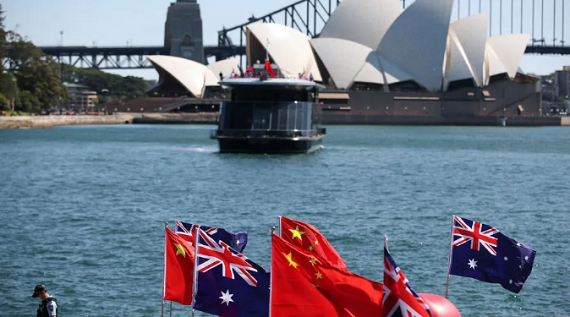
The Australian Federal Government recently vetoed two Belt and Road Memorandums of Understanding signed between the state of Victoria and China’s National Development and Reform Commission.
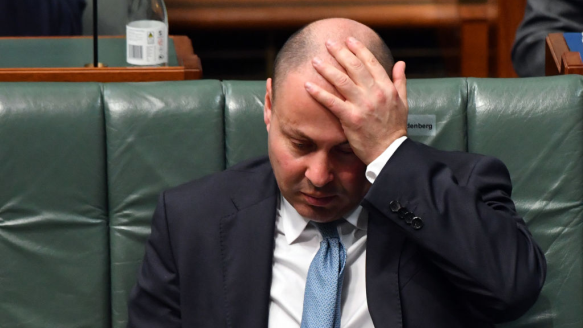
Foreign Affairs Minister Payne said the arrangements were considered to be “inconsistent with Australia’s foreign policy or adverse to Australia’s foreign relations.”
Newly appointed Defence Minister Dutton thundered that “China and others need to understand that Australia is not going to be bullied and we’re standing up for our beliefs.”
The reactions all seem a bit over the top when the BRI agreement did not commit the Victoria government to specific projects and were not legally binding. The agreements were about potential future co-operation.
Many Australian businesses quietly wondered just how much more debilitating aggravation would be unleashed by a Government that seems intent on frustrating cooperation with China.
The decision was not a surprise. In December 2020 the government introduced the Foreign Arrangements Scheme. It was clear the legislation was primarily aimed at the Belt and Road MOUs signed by the state of Victoria. The federal Government has a deep dislike for the Premier of Victoria, Daniel Andrews so the attack is part of a domestic political quarrel.
Although there are impacts on the Australia-China relationship, the driving factor behind this legislation is more about domestic politics and attacking domestic political rivals.
In addition to these domestic skirmishes, there was an awareness of the impact this decision would have on Australia-China relations. The timing of the decision coincidentally followed an address by China’s Deputy head of Mission, Wang Xining to the National Press Club. He again extended an olive branch, discussing ways the relationship could improve.
The last time Wang Xining did this, the response from Prime Minister Morrison was swift, immediately pledging to tear up State agreements with China.
Following this week’s press conference with Wang Xining, the Foreign Affairs Minster announced exactly that.
Australia was well aware of the disruption this announcement would cause and the way this decision would further cool Australia-China relations. There are some in the Federal Government who welcome this attack. There is an active cohort of China hawks who want to contain and confront China.
In this sense, this announcement serves an Australian foreign policy agenda which very much takes its lead from the United States. This doesn’t mean following every step the US takes, particularly under the ex-President Trump, but it does mean Australia looks to the US for guidance and support. This was the key message Australia took from the meetings in Anchorage.
Australia interpreted US Secretary of State Blinken’s comments in Anchorage to mean that the United States has Australia’s back. Basking in this sunshine, it was perhaps inevitable that an emboldened Australia would take the next step and veto the BRI agreement.
There is a third aspect of this foreign policy as it relates to international relations rather than just relations with China. Australia has aspirations to play a leadership role in the newly created RCEP. Although an outside observer to the upcoming ASEAN meeting, Australia believes it plays an influential role in these organisations.
However, Australia’s rejection of the BRI puts it out of step with many of the RCEP and ASEAN members. These are countries who are actively embracing the BRI and see this as a way to increase their engagement with China. They are wary of Australia’s less than nuanced approach to China.
Part of the reason for the veto was to send an international message but judging by the level of commitment made by many ASEAN nations to BRI, it would seem that this message is already obsolete.
Australian business has watched on as this clumsy domestic politics spills over into already fraught China relations and the relationship with other nations in the region. Worried by the increasing anti-Chinese rhetoric, many business organisations have chosen to remain largely silent.
Chair of the Australia China Business Council, David Olsson said “Australian business prefer to look beyond the politics of BRI and focus on the genuine commercial opportunities that will emerge from infrastructure investments.”
The veto of the Victorian agreement is largely about domestic politics, but it also signals a change from benign acceptance of the BRI, to active pushback against the BRI. Many in business believe this is a foolish change that will further damage the foundations of Australia’s prosperity.
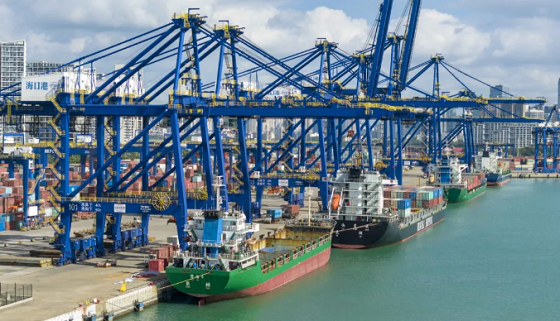
The Belt and Road Initiative is too large and has too much momentum to be hindered by this Australian decision.
The Australian Government may have rejected BRI, but smart Australian businesses know that this is where the future lies.
The article reflects the writer’s opinions, and not necessarily the views of China Focus.
Belt and Road Initiative

Daryl Guppy
Daryl Guppy is an international financial technical analysis expert. He is a national board member of the Australia China Business Council.

相关阅读




免责声明:本网站信息仅供一般参考,不构成投资或财务建议。虽力求准确与完整,但不保证信息的准确性、完整性或时效性。投资有风险,决策前请咨询专业独立顾问。使用本网站即视为接受本免责声明。
热门点击
-
- 【澳股聚焦】ASX年内涨幅归零之后 市场在等待什么?
-
- 【异动股周报】NMD首秀飙升 DAL见矿翻番 ALV单日飙200% 资源与生物科技双线爆发
-
- 【异动股】Image Resources(ASX:IMA) : 一家市值3千万的澳洲矿企 手里捏着龙佰集团最想要的下一座矿
-
- 【10.13】今日财经时讯及重要市场资讯
-
- 嘉能可登陆澳交所 三巨头鼎立时代开启 ASX铜矿标的稀缺格局迎破局者
-
- 【10.12】今日财经时讯及重要市场资讯
-
- 中国资本vs澳洲关键矿产博弈观察:兴业银锡与两家ASX小盘勘探股的“恩怨情仇”
-
- 2026年IMARC矿业大会悉尼之约 澳大利亚矿业技术与创新力量的全球汇聚
-
- 【10.14】今日财经时讯及重要市场资讯
-
- Ballard Mining(ASX:BM1)获4500万澳元机构融资支持 Mt Ida金矿资源扩量与开发工程同步推进
-
- 液冷数据中心开发商Firmus澳交所上市在即 揽获OpenAI合同大单
-
- 【10.8】今日财经时讯及重要市场资讯
-
- 【异动股】暴涨逾200% 6百万融资到位 Peter Cook站台 54周股价巅峰过后Mamba Exploration (ASX:M24) Copper Hills历史铜带新钻备受瞩目
-
- 浅层探新、深部升级 Lithium Plus Minerals(ASX:LPM)启动Lei锂项目靶向钻探Lei Primary与Secondary双线测试
-
- Li-S Energy(ASX: LIS)与Safesky签署合作协议 推进锂硫电池应用于战术无人机